Moonshot Cargo Lander — Engineering_▢✕
FileEditViewGoFavoritesHelp
UpAddress:
Drawing LND-003 · Entry 03 · Jun 2023 – Jun 2024
Moonshot Cargo Lander
Mission Design · Moonshot Project
Complete
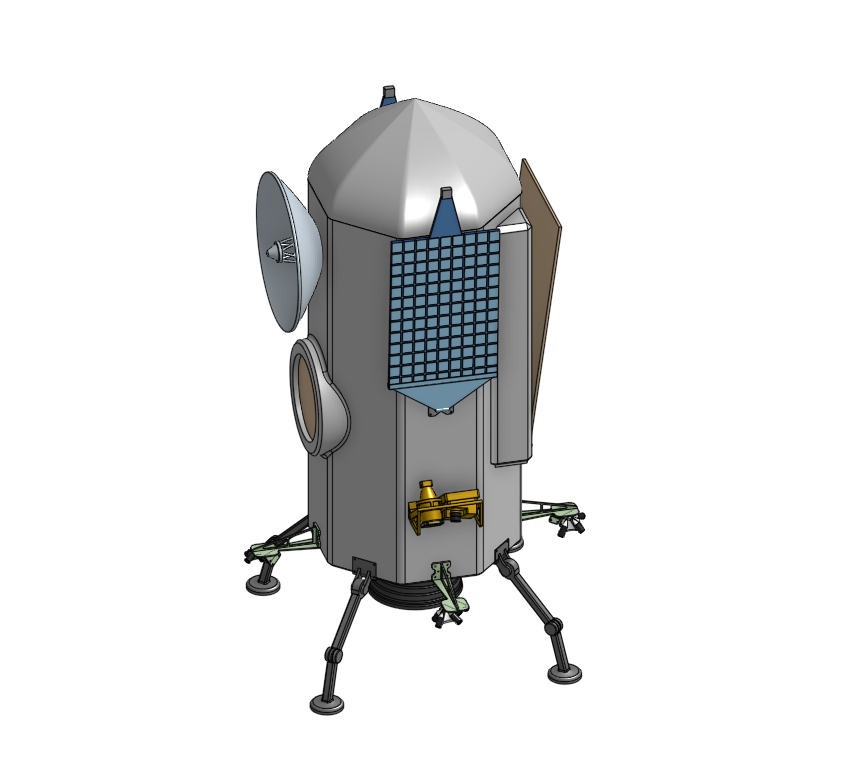
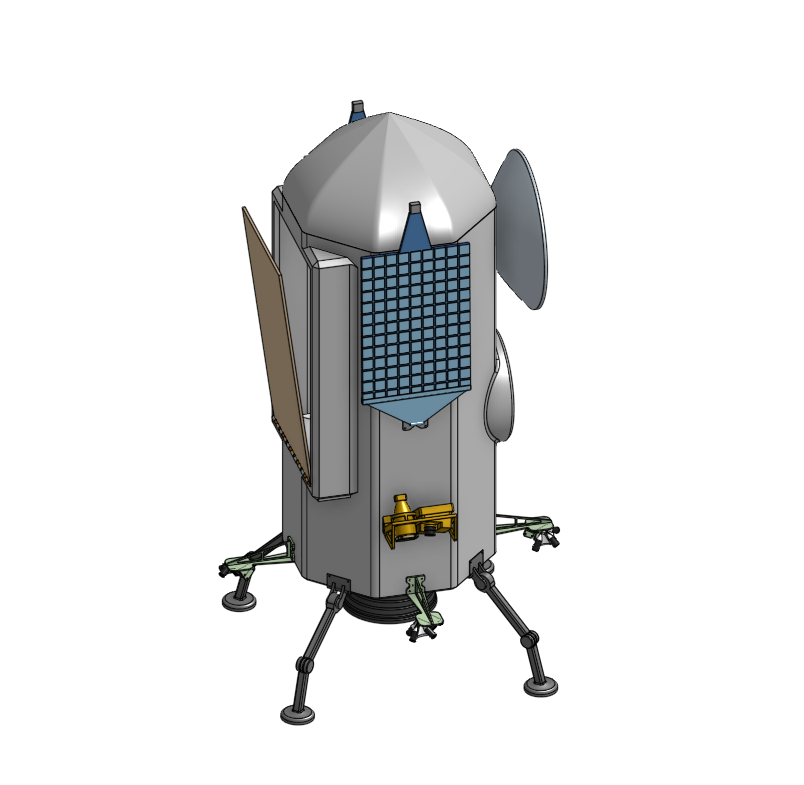
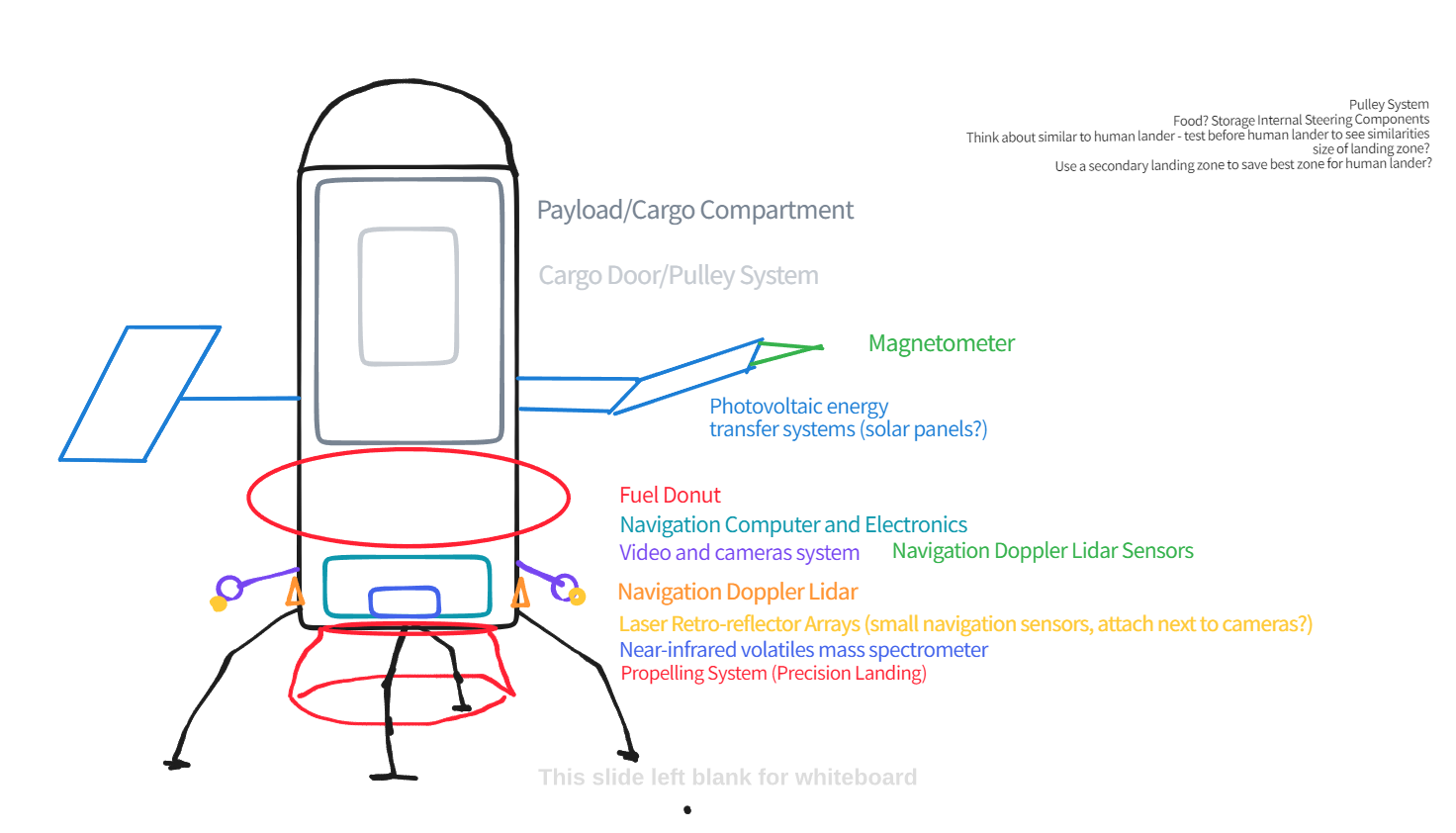
A team-led lunar mission simulation under the callsign "Alpha Aces": I directed a 12-person group inside a 200+ member program to research, design, and present a cargo lander for lunar delivery, modeled in Fusion 360. The team's process ran research → design → presentation, with my own research focused on Moon-to-Mars concepts.
Role & team
- Led a 12-person team operating within a 200+ member simulation, coordinating mission strategy and data analysis.
- Distributed research across specialists — precision landing, ISRU, payloads, landing sites — and personally researched Moon-to-Mars concepts.
- Mission frame: a 30–45 day rotation supporting a 2–5 astronaut team across LEO and lunar-surface training.
Research — precision landing
- Studied Terrain Relative Navigation (TRN), which correlates camera imagery to maps for landing accuracy down to a fraction of a mile.
- Referenced multi-camera descent imaging (wide-angle descent + narrow-angle regolith) and phased powered-descent → approach → terminal-descent profiles.
- Paired precision landing with hazard avoidance to mitigate plume–surface interactions.
Research — cargo, payloads & ISRU
- Sized the lander against real payloads (e.g. VIPER at 5×5×8 ft / ~992 lb, plus MOXIE, LAFORGE, and Moonranger rovers).
- Evaluated south-polar landing sites (Faustini Rim, Shackleton-adjacent peaks, de Gerlache Rim, Nobile Rim…) for ice access, sunlight, and terrain.
- Investigated in-situ resource utilization — water-ice extraction and oxygen generation — as the case for local resource use.
Design considerations
- Framed the cargo lander as a way to test concepts ahead of crewed missions, using secondary landing zones to preserve primary sites for human landers.
- Called out redundant communications, solar-panel orientation, and lighting-dependent sensor performance as key constraints.
Design & outcome
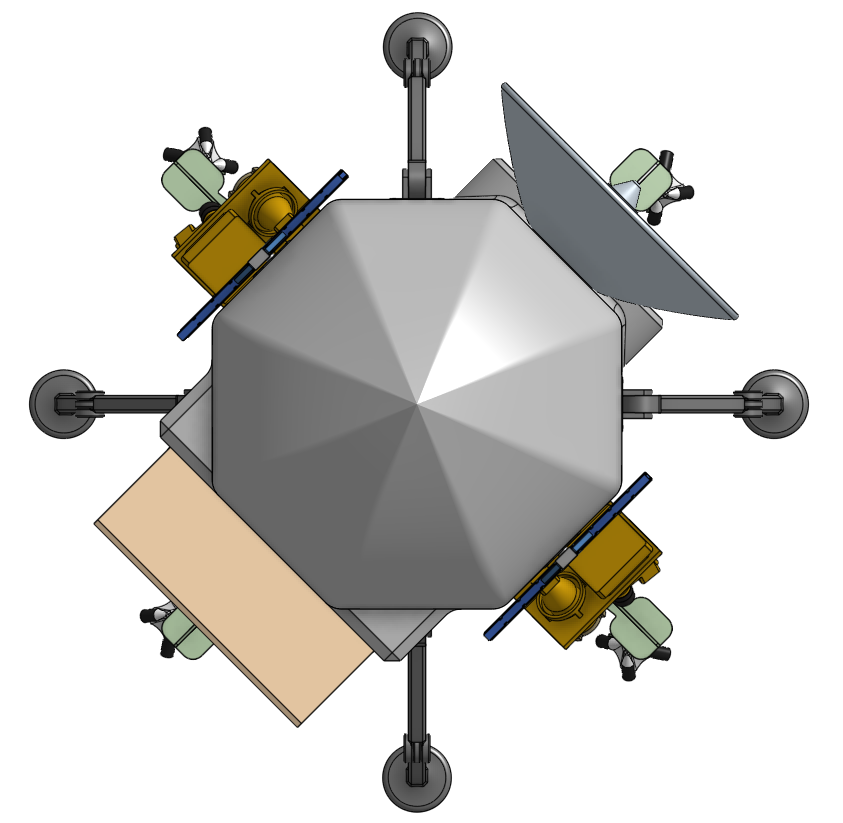
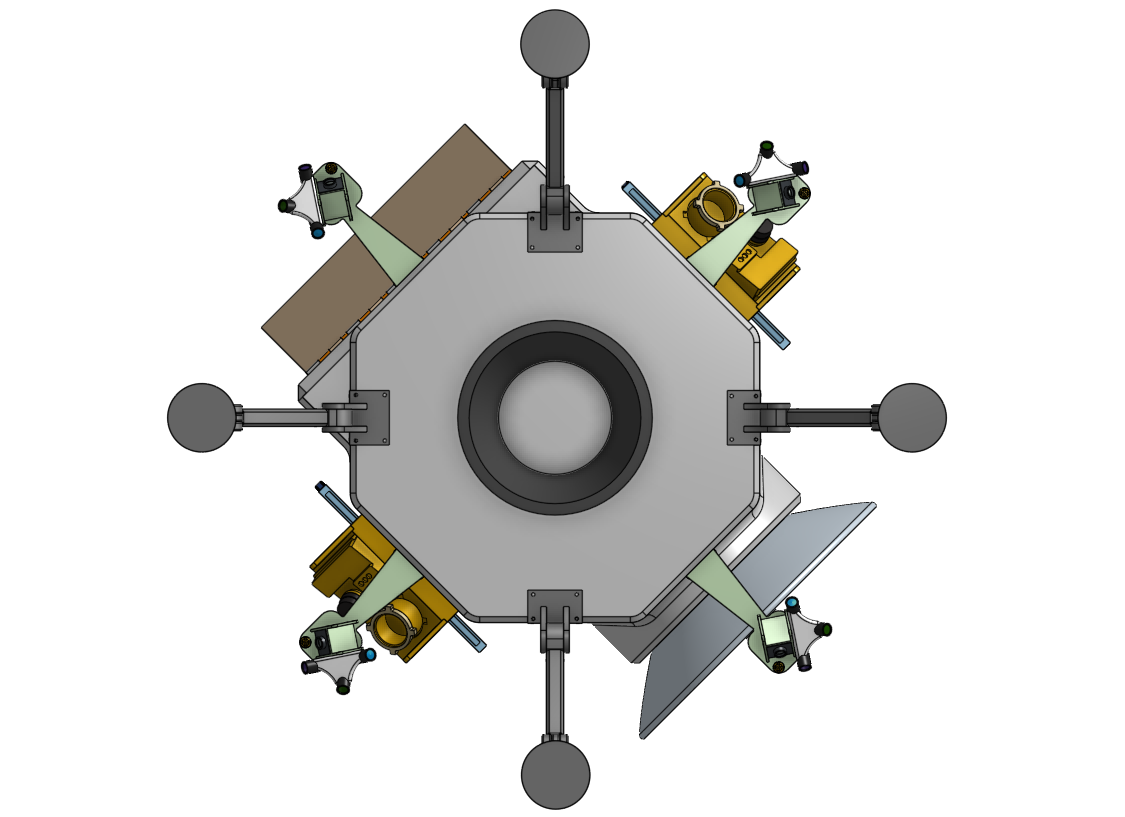
- Designed and simulated the cargo lander in Fusion 360 against a 5×5×8 ft cargo-volume constraint, validating structural integrity for payload delivery.
- The coordinated plan and design resulted in a successful simulated lunar landing.
Specifications
Callsign:Alpha Aces
Team:12 (within a 200+ member sim)
Role:Team Lead · Moon-to-Mars research
Tool:Fusion 360
Cargo volume:5×5×8 ft constraint
Navigation:Terrain Relative Navigation
Outcome:Successful simulated landing
Tools:Fusion 360Structural AnalysisMission Planning
Figures
Attachments
Complete · Team Lead, scale ConceptMission Design